
Tyson Summers Fired: Why Colorado State Parted Ways With Its Defensive Coordinator Mid-Game
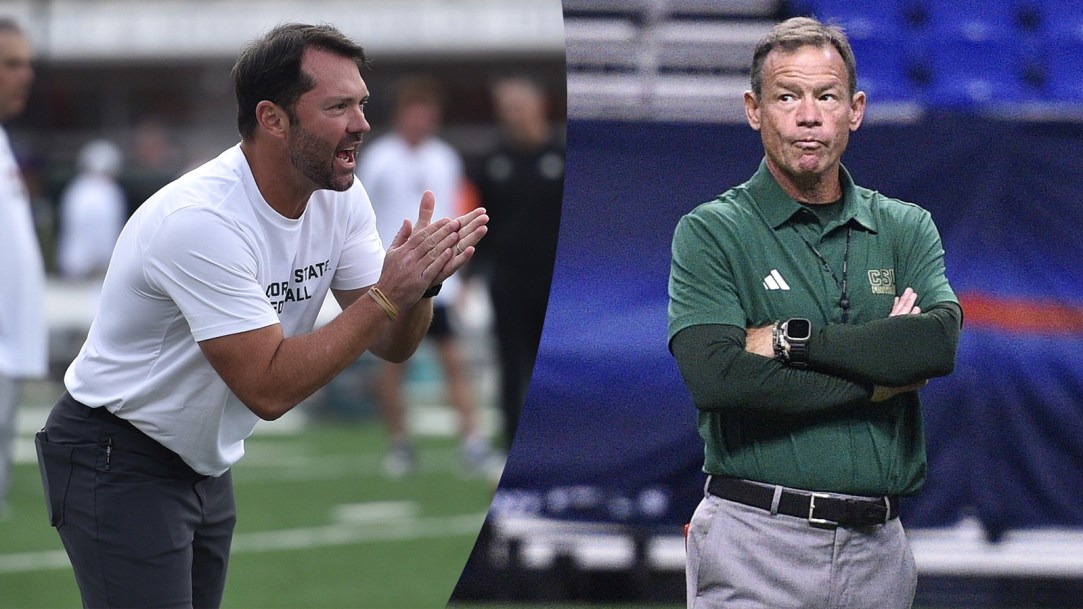
Colorado State parted ways with defensive coordinator Tyson Summers during a disastrous 56-26 home loss to Oregon State on October 3, 2026, bringing an abrupt end to his second stint running the Rams’ defense. What made the coaching change particularly unusual was its timing: Summers lost his defensive play-calling responsibilities during the first half and subsequently left the field, with head coach Jim Mora confirming after the game that he was no longer part of the program.
The extraordinary development unfolded as Oregon State repeatedly broke through Colorado State’s defense at Canvas Stadium. Co-defensive coordinator Kenny McClendon took over the defensive play-calling, and he is expected to lead that side of the team moving forward.
Sudden Exit
Summers started Saturday’s game in his usual role, calling Colorado State’s defensive plays from the sideline.
That arrangement did not last long.
Oregon State scored touchdowns on its first two possessions, after which Mora said he relieved Summers of his play-calling responsibilities. Summers then left the field rather than remaining on the sideline in another capacity.
Mora clarified afterward that he had not instructed Summers to leave the field. According to the Colorado State head coach, Summers made that decision himself. Mora then confirmed that the separation was permanent and that Summers was no longer with the football program.
That distinction provides important context to reports describing Summers as simply being “fired during the game.” Mora removed him as defensive play-caller during the contest; Summers left the field, and his departure from the program was confirmed afterward.
Defensive Collapse
The coaching drama occurred during another difficult performance for Colorado State’s defense.
Oregon State finished with 727 total yards, while averaging approximately 10.2 yards per play. The Beavers’ offensive total represented a school record and was the second-most yardage ever surrendered by a Colorado State defense.
Quarterback Braden Atkinson threw for 413 yards and five touchdowns, facing limited pressure as Oregon State consistently created explosive plays.
The problems were apparent almost immediately.
Atkinson completed his first 16 passes and entered halftime having completed 20 of 21 attempts for 250 yards and three touchdowns. Oregon State accumulated 385 first-half yards, scoring touchdowns on five of its six possessions before the break.
Colorado State briefly tied the game at 14, but the Beavers soon regained control.
Oregon State eventually scored touchdowns on six consecutive possessions, leaving the Rams with few answers defensively.
Historic Problems
The Oregon State defeat was not an isolated poor defensive performance.
Colorado State entered the matchup already facing serious questions after allowing large totals in its preceding games. In the two contests before Oregon State, the Rams had surrendered 100 combined points and 1,101 total yards against BYU and UTSA.
Against Oregon State, the downward trend continued.
The Rams allowed more than 500 total yards for a third consecutive game and conceded at least 50 points in consecutive contests for the first time since 1984.
Following the Oregon State defeat, Colorado State stood at 2-3, having allowed 193 points through its opening five games. That works out to 38.6 points allowed per game.
Those numbers help explain why Mora decided that an immediate change to the defensive operation was necessary.
McClendon Takes Over
Kenny McClendon assumed play-calling responsibilities after Summers’ departure.
McClendon entered the game as Colorado State’s co-defensive coordinator, associate head coach and defensive line coach. He had a play sheet on the sideline once Summers disappeared from view, while cornerbacks coach Trent Matthews was also seen signaling calls to the defense.
Mora subsequently identified McClendon as the Rams’ primary defensive play-caller moving forward.
The timing gives Colorado State a small opportunity to reorganize. The Rams have a bye before traveling to play Texas State on October 15, providing the defensive staff additional practice time to establish responsibilities and make adjustments.
Summers’ Return
The ending is especially striking considering Summers’ recent history with Colorado State.
Summers returned to the Rams in January 2025 as defensive coordinator, beginning his second stint in the position. He had previously served as Colorado State’s defensive coordinator in 2015 under Mike Bobo.
Before returning to Fort Collins, Summers spent three seasons running Western Kentucky’s defense. His final Hilltoppers unit led Conference USA in pass defense in 2024, allowing only 176.1 passing yards per game.
His responsibilities at Colorado State then expanded dramatically during the 2025 season.
When the university dismissed head coach Jay Norvell on October 19, 2025, Summers was promoted to interim head coach for the remainder of the season.
Summers ultimately coached the final five games before Colorado State hired Jim Mora as its permanent head coach.
Mora Kept Him
Rather than replacing Summers when he arrived, Mora retained him as defensive coordinator for the 2026 season.
That gave Summers continuity at a program where he had just served as interim head coach.
Only weeks into the new season, however, the defensive results created increasing pressure. The situation reached its breaking point against Oregon State, when Mora decided he could no longer wait until halftime or the following week to change play-callers.
The result was one of the more unusual coaching changes of the 2026 college football season.
Record Crowd
The circumstances surrounding the defeat made it even more painful for Colorado State.
A program-record crowd of 41,000 attended the Homecoming game at Canvas Stadium, which also represented an important early Pac-12 matchup for the Rams.
Instead of witnessing a turnaround, supporters watched Oregon State deliver one of the most productive offensive performances in its history.
Colorado State ultimately fell 56-26, suffering its third consecutive defeat.
Mora acknowledged after the game how poor the recent performances had been but maintained that he believed the roster had the character necessary to respond.
What Comes Next
Colorado State now faces the challenge of repairing its defense without the coordinator who entered the season in charge of the unit.
McClendon becomes the central figure in that effort, beginning with the extra preparation period before the Texas State matchup. The immediate priorities will include reducing explosive plays, creating more quarterback pressure and finding a way to stop opponents from sustaining long scoring drives.
For Summers, meanwhile, the Oregon State game represents an unexpectedly abrupt conclusion to his latest Colorado State chapter.
Less than a year after serving as the Rams’ interim head coach and only months after being retained by Mora, Tyson Summers went from Colorado State’s defensive play-caller to being out of the program during the course of one remarkable Saturday night.
The unusual circumstances will attract attention, but the underlying reason for Colorado State’s change is much simpler: after another night of huge yardage and repeated touchdowns, the Rams decided their struggling defense needed new leadership immediately.